‘So
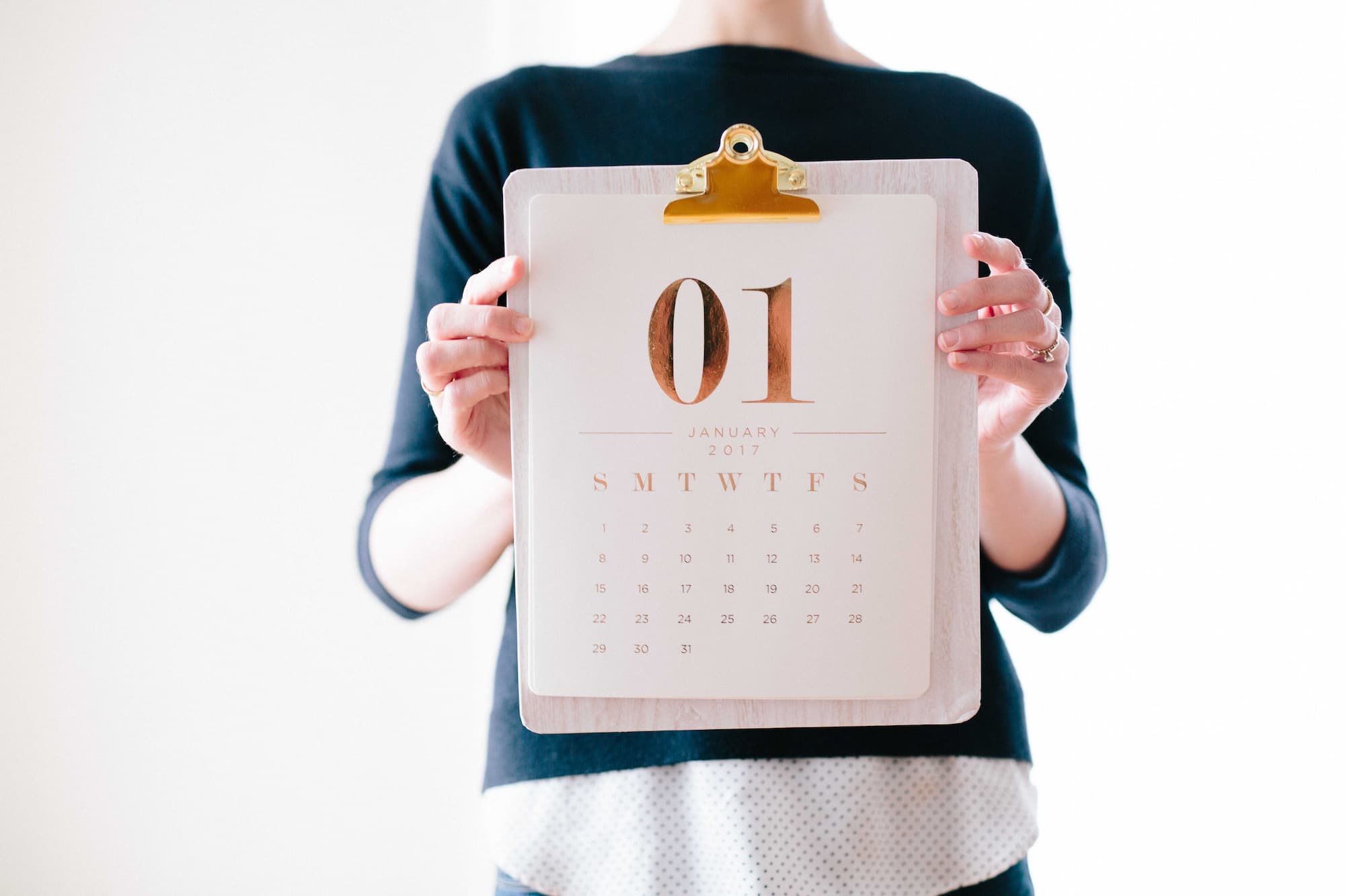
there we are, with a calendar that has come through many
adventures and is still far from perfect. As a matter
of fact, a really perfect calendar is impossible. It has
to be a compromise, for it attempts to reconcile natural
fixed periods, which are not reconcilable. The things
to be desired are the greatest accuracy combined with
the greatest feasible convenience. We cannot scrap or
change our days or our years without altering the motion
of the sun or earth—those are immovable obstacles.
We could, but do not desire to, change our week; the seven-day
week is too deeply imbedded in tradition, religion and
convenience. But we can change our month, which is an
irrational division of time conforming to neither moon
nor sun.’
‘.
. . For, in the desired reform, it is not a matter
of obtaining the ideal calendar but that which is
the most practical, that is to say the one which remedies
the depreciatory disadvantages of the present one
without disturbing our religious or civil life. The
project of The World Calendar Association responds
perfectly to these demands; conceived in such a manner
that it may be adapted to any race, country or religion,
it would certainly prove for our modern world, so
enervated, to be an element of order, stability concord,
unity and even of religiousness. When the nations
agree on the subject, it will be an event of good
omen and one which will have constituted, furthermore,
the most vast agreement ever passed among the civil
and religious authorities of the world.’
During the first half of last century, recognition of the need
for a user-friendlier successor to the Gregorian calendar prompted
world-wide study. It identified The World Calendar as the best
probable choice.
A well-documented
attempt to
make the change followed, but was not completed. In 2010, The World
Calendar in 2012 continues to unfold as a multi-level
demonstration that the current, nearly unanimous Gregorian calendar,
as we know and ignore it, quietly stifles (smothers/chokes)
potential.
"Under the reform plan, Worldsday will come after
Saturday, December 30th, and will be followed by Sunday,
January 1st. Since 364 is exactly divisible by 7 while
365 and 366 are not there is no better way to stabilize
the calendar so that month-dates will always coordinate
with weekdays."
---Analysis
by Daniel
Sher
How
can any civilized world achieve world peace while its main
calendar battles with everyone who uses it?
= + = + = + = + =
If we can watch news happening live around the world
and around other planets within minutes, certainly we can
change to a better calendar between now and 2012!
= + = + = + = + =
We hear of On-This-Date anniversaries after a year
or hundreds of years, but often minus the day of the week.
Without research or extensive computation,
that has been lost. Beginning in 2012, at the ?op of the
hour? new events gain exacting significance with observances
on the same day of the week.It's amazing that
we have given that so little thought when making such a
big deal over them?
=
+ = + = + = + =
The
same things that make calendar change so formidable also
make it absolutely too good to again let pass us by. Calendar
affects everybody who uses it and to consider that a better
calendar is available offers potential to improve daily
living – whatever that concept includes. Calendar
reform challenges many beliefs. Some will be put aside and
others confirmed. “The
only thing to fear is FEAR
OF SELF.”
As
2012 approaches, some are using it to spread their own fears
with predictions of doom and destruction. When no such negativity
arrives, like in 2000, world end scenarios will simply move
out – again. But enough
with nebulous! What is out
of our control will come to pass and what we’re able
to do can happen if we choose. The ‘top of the hour’
recognition of unanimous clock on Earth connects with another
anticipation for beyond 2012: that of raised consciousness
and increased unity. No other project is so specifically
fitting and with more potential gain than calendar reform.
Finish what study
you need now to take
part in letting The World Calendar in 2012 happen
on 1 January 2012.
(Posted 28 March 2008)
=
+ = + = + = + =
TWCA
concentrates on conversion to The World Calendar in 2012
so that visualization of and planning towards any date thereafter
becomes immediately and consistently easier, with or without
a physical version of calendar, eyes open or closed. Simultaneously,
with the means to simpler documentation and memories in
place, less complicated access to past after 1 January 2012
accumulates day by day. (Posted
17 September 2008)
“Grandpa,
Daddy said when he was little like me he used miles
per gallon to move around. What’s a miles
per gallon?” “Oh, what a memory! I’m
glad we’re past that, but it was something
we did before knowing any better. For fun, since
we don’t burn much of anything now, let’s
Google MPG.” (Posted 13
December 2008)
"Jawaharlal
Nehru has said: 'Every step might well be judged according
to whether it increases or decreases the element of fear in
the world. If there is less fear then there is more reasoned
thinking, there is more understanding.' ” --from
The
Journal of Calendar Reform Vol. 25, Dec. 1955-Jan. 1956, page
190.
TWCA
IS STILL
WAITING FOR ANSWERS
-- 21
September 2009
TWCA’s
contribution to President-elect Obama’s Citizen’sBriefingBook
posted shortly before it closed on 18 Jan. 2009. Hyper-links
were not permitted so here
it is with links.
Once
adopted as the world's primary calendar of choice,
daily use will not require finding a reference
copy first. Experiencing this conveniencewhen six months of 2006 matched
The World Calendar spoke louder than any words
about why we need this better calendar.
THANK
YOU
for your questions, interest and
support to date!
Does
annual obsolescence make it more tempting or less tempting
to buy a cheap calendar? Would your criteria for selecting
a printed calendar change if you could use it year after
year? And consider the wasted energy when countless calendars
go unsold each year.